
Island FS116i
FS116i Island
Raw data


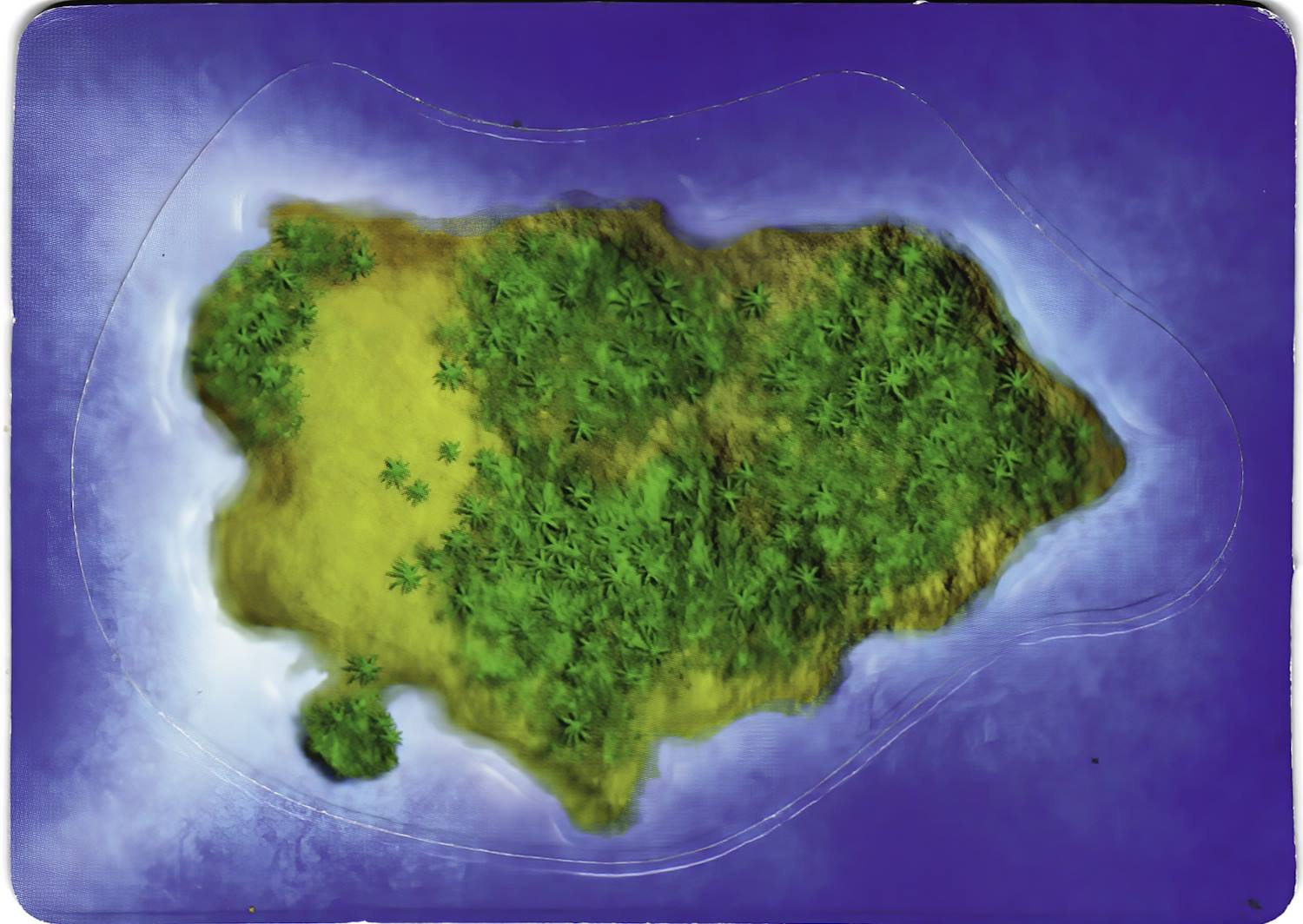
Island
A navigable landmass. Ships can dock at islands to repair and explore for valuables.
The islands are one of the most strategic elements of the game, they allow for several things:
Docking : As a free action, a ship touching an island or a fort with its bow is allowed to dock, it then can drop off and board crew or equipment, or transfer crew or equipment to and from another ship docked at the same island. You can't dock at an opponent's home island or at an enemy fort.
Unloading treasure: When you dock at your home island or a fort, you must unload all treasure worth gold points; this is a free action. Treasure unloaded at a fort is placed inside of the fort, and it counts toward victory.
Repairing : The repair action allows a ship docked at her home island or fort to repair (bring back into play) one mast.
Placing islands : For a 40-point game, players must use three islands per player (six islands for two players, nine islands for three players, etc.). If you don't have enough islands, use similarly sized and shaped objects to represent them. Starting with the first player, players take turns randomly choosing an island and placing it on the play area. Islands must be placed at least 3L but not more than 6L from each other. Depending on your own preferences and the number of ships/points you are playing with, players may agree on any starting rules including the setup of the playing area.
Choosing home islands : The last player chooses which island will be the home island of the first player. The first player places his or her ships so that their bows (fronts of the ships) touch that island. The first player then chooses a different island to be the second player's home island, and that player places his or her ships so that their bows touch that island. The remaining player's home islands are chosen in order in this manner. The remaining islands are called wild islands.

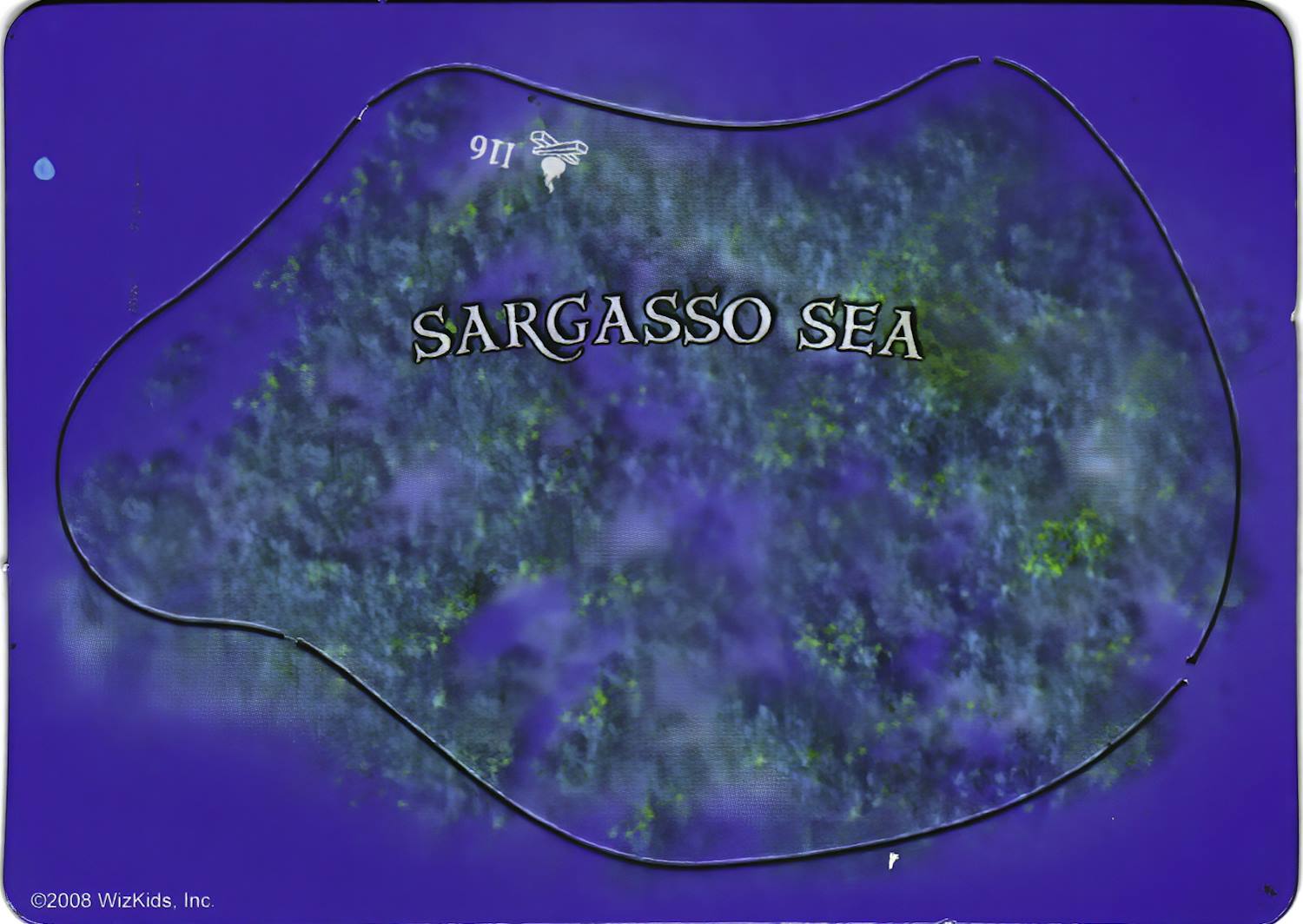
Sargasso Sea
An area of calm ocean waters filled with floating seaweed. Ships may become entangled, slowing their movement.
When a ship or sea creature moves over a Sargasso Sea, roll a d6. The result is the Sargasso Sea's rating until the end of that player's turn. Compare the rating to how many masts or segments the game piece had when it was constructed. If the Sargasso Sea's rating is more than the number of masts or segments, the game piece is tangled in the weeds and might not be able to move.
For example, if a 3-mast ship sails over a Sargasso Sea with a rating of 4, she is tangled. If a 4- mast ship sails over a Sargasso Sea with a rating of 2, the ship is unaffected. If the Sargasso Sea rating and the number of masts or segments are the same, the game piece is unaffected.
If a game piece is tangled, you can use its action for the turn to try to free it. Roll a d6 and add the current number of masts or segments on the tangled game piece to the result. If the result is more than 6, the game piece is untangled. Orient it in any direction, facing away from the Sargasso Sea and touching any edge of the Sargasso Sea. It can be given a move action to move normally next turn.